Cooperazione transfrontaliera: strategie integrate in modo ancora di orme su entrambi i lati del confine franco-italiano

Sebbene i confini europei siano attraversati ogni giorno da intensi flussi umani, economici e ambientali, l’integrazione della dimensione transfrontaliera nei documenti di pianificazione territoriale rimane variegata. Nell’ambito del progetto Marittim’Traité, due analisi recenti condotte dalla Mission Opérationnelle Transfrontalière, dedicate alle strategie regionali francesi e italiane, delineano un panorama preciso: sebbene la cooperazione transfrontaliera venga presa in considerazione, spesso rimane implicita, settoriale o confinata ai progetti europei nei piani di sviluppo regionale.

Dai documenti strutturali francesi, risulta un’attenzione parziale al confine

Dal lato francese, gli SRADDET (documenti strategici di pianificazione Regionale, Sviluppo Sostenibile e di Uguaglianza Territoriale) appaiono come degli strumenti strutturali, offrendo un contesto favorevole per l’inserimento delle questioni transfrontaliere.
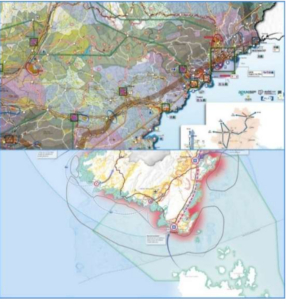
La Regione Provence-Alpes-Côte d’Azur e la Collettività della Corsica illustrano questa dinamica: i loro documenti di pianificazione riconoscono esplicitamente il ruolo strategico del confine – terra, mare o alpino – nella pianificazione dell’assetto del territorio, nella mobilità, nell’ambiente e nello sviluppo economico.

Lo SRADDET della Regione Provence-Alpes-Côte d’Azur evidenzia così la cooperazione con i territori italiani confinanti, principalmente attraverso la funzione di corridoio europeo tra Italia e Spagna, o l’importanza delle continuità ecologiche transfrontaliere, in particolare in relazione con Liguria e Piemonte. Tuttavia, questa dimensione meriterebbe di essere integrata in modo più approfondito nel documento in diversi ambiti, inclusa la natura strategica dei collegamenti transfrontalieri, in particolare le strade, che sono spesso minacciate dagli effetti del cambiamento climatico.

In Corsica, il PADDuC (Programma di pianificazione e sviluppo sostenibile della Corsica) promuove la continuità territoriale europea con la Sardegna, il commercio marittimo e le opportunità offerte dal programma Francia-Italia-Marittime per rafforzare il ruolo dell’isola nell’area mediterranea.

Ampliando la visione ad altri confini, il benchmark dei SRADDET transfrontalieri francesi mette in evidenza alcune buone pratiche: diagnosi transfrontaliera fin dalla fase di panorama, mobilitazione del transfrontaliero attraverso obiettivi dedicati, consultazione degli attori transfrontalieri durante la definizione dei piani e articolazione con i programmi Interreg esistenti.

Alcune regioni francesi, come il Grand Est, vanno oltre facendo del transfrontaliero un segno di identità e un asse portante della loro strategia regionale.

In Italia, un approccio più settoriale e spesso implicito

Dal lato italiano, l’analisi mette in evidenza un panorama istituzionale più frammentato. A differenza del modello francese, non esiste un documento trasversale equivalente al SRADDET: la pianificazione si basa principalmente su un accostamento di piani settoriali (mobilità, energia, ambiente, paesaggio) e strategie tematiche.
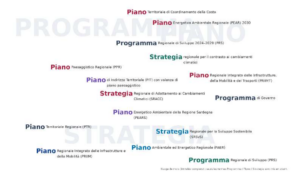
Sebbene la cooperazione transfrontaliera sia effettivamente presente, in particolare attraverso i programmi Interreg, i Gruppi Europei di Cooperazione Territoriale (GECT) o le strategie macroregionali dell’Unione Europea, raramente appare come obiettivo strutturale dei documenti regionali.

In molti casi, le questioni transfrontaliere vengono menzionate indirettamente, sotto forma di riferimenti a corridoi europei, finanziamenti europei o progetti pilota, senza una visione complessiva chiaramente espressa.

Le regioni Liguria, Toscana e Sardegna, studiate nella mappatura comparativa, illustrano questa tendenza. I documenti sulla mobilità o sull’energia talvolta riconoscono la necessità di cooperazione internazionale, ma senza una precisa declinazione strategica con i territori confinanti.

Eccezione notevole tra i territori di confine italiani, la Valle di Aosta si distingue per un’integrazione più esplicita del confine transfrontaliero, in connessione con Francia e Svizzera, rendendo il confine un’opportunità per lo sviluppo territoriale, ambientale ed economico.

Una dimensione transfrontaliera riconosciuta, ma comunque disomogenea

Le due analisi convergono su un’osservazione condivisa: la dimensione transfrontaliera esiste, ma rimane diversamente integrata e spesso secondaria rispetto alle priorità nazionali o settoriali.

I documenti francesi si distinguono per la loro natura trasversale e normativa, facilitando potenzialmente la considerazione delle interdipendenze territoriali oltre i confini. Al contrario, i documenti italiani affrontano più frequentemente questioni transfrontaliere dal punto di vista operativo, attraverso progetti o cooperazione ad hoc.

Tuttavia, le sfide sono ampiamente condivise: adattamento al cambiamento climatico, gestione delle aree costiere e alpine, continuità ecologica, isolamento dei territori insulari, mobilità sostenibile e interconnessioni energetiche. Tutte queste sono questioni che richiedono risposte coordinate a livello transfrontaliero.

Verso un cambiamento nella scala della cooperazione?

Oltre alla diagnosi, il lavoro evidenzia un’opportunità strategica: sviluppare la cooperazione transfrontaliera da uno strumento principalmente finanziario e basato su progetti a una reale ambizione di sviluppo condiviso.

La sfida è dare al transfrontaliero un ruolo pienamente stabilito nelle strategie regionali e nei documenti di pianificazione, su entrambi i lati del confine.

Questa è l’ambizione che il progetto Marittim’Traité desidera promuovere. Il lavoro analitico svolto dalla Mission Opérationnelle Transfrontalière nell’ambito di questo progetto è attualmente in corso e porterà presto alla stesura di una guida metodologica per l’integrazione delle continuità interregionali e transfrontaliere nella pianificazione regionale, in francese e italiano.
Coopération transfrontalière : des stratégies encore inégalement intégrées de part et d’autre de la frontière franco-italienne

Alors que les frontières européennes sont traversées chaque jour par des flux humains, économiques et environnementaux intenses, l’intégration du fait transfrontalier dans les documents de planification territoriale demeure contrastée.

Dans le cadre du projet Marittim’Traité, deux analyses récentes réalisées par la Mission Opérationnelle Transfrontalière, consacrées aux stratégies régionales françaises et italiennes, dressent un état des lieux précis : si la prise en compte de la coopération transfrontalière progresse, elle reste souvent implicite, sectorielle ou cantonnée aux projets européens dans les schémas d’aménagement régionaux.

Des documents français structurants, partiellement attentifs au transfrontalier

Côté français, les SRADDET (Schémas régionaux d’aménagement, de développement durable et d’égalité des territoires) apparaissent comme des outils structurants, offrant un cadre propice à l’intégration des enjeux transfrontaliers.

La Région Provence-Alpes-Côte d’Azur et la Collectivité de Corse illustrent cette dynamique : leurs documents de planification reconnaissent explicitement le rôle stratégique de la frontière – terrestre, maritime ou alpine – dans l’aménagement du territoire, la mobilité, l’environnement ou le développement économique.

Le SRADDET de la Région Provence-Alpes-Côte d’Azur met ainsi en avant la coopération avec les territoires italiens voisins, principalement à travers la fonction de corridor européen entre l’Italie et l’Espagne, ou encore l’importance des continuités écologiques transfrontalières, notamment en lien avec la Ligurie et le Piémont. Toutefois, cette dimension mérite d’être encore mieux traduite dans le document dans plusieurs domaines, dont celui du caractère stratégique des connexions transfrontalières, notamment routières souvent menacées par les effets du changement climatique.

En Corse, le PADDuC (plan d’aménagement et de développement durable de Corse) valorise la continuité territoriale européenne avec la Sardaigne, les échanges maritimes et les opportunités offertes par les programmes France–Italie–Maritime pour renforcer le rôle de l’île dans l’espace méditerranéen.

En élargissant le regard à d’autres frontières, le benchmark des SRADDET frontaliers français souligne des bonnes pratiques : diagnostic transfrontalier dès l’état des lieux, mobilisation du transfrontalier à la fois de manière transversale et via des objectifs dédiés, consultation d’acteurs transfrontaliers lors de l’élaboration des schémas, et articulation avec les programmes Interreg existants.

Certaines régions, comme le Grand Est, vont plus loin en faisant du transfrontalier un marqueur identitaire et un axe structurant de leur stratégie régionale.

En Italie, une approche plus sectorielle et souvent implicite

Du côté italien, l’analyse met en évidence un paysage institutionnel plus fragmenté. Contrairement au modèle français, il n’existe pas de document transversal équivalent au SRADDET : la planification repose principalement sur une juxtaposition de plans sectoriels (mobilité, énergie, environnement, paysage) et de stratégies thématiques.

Si la coopération transfrontalière est bien présente, notamment à travers les programmes Interreg, les groupements européens de coopération territoriale (GECT) ou les stratégies macro-régionales de l’Union européenne, elle apparaît rarement comme un objectif structurant des documents régionaux.

Dans de nombreux cas, le transfrontalier est évoqué de manière indirecte, au détour de références aux corridors européens, aux financements européens ou à des projets pilotes, sans vision d’ensemble clairement affirmée.

Les régions de Ligurie, Toscane et Sardaigne, étudiées dans la cartographie comparative, illustrent cette tendance. Les documents de mobilité ou d’énergie reconnaissent parfois la nécessité de coopérations internationales, mais sans déclinaison stratégique précise avec les territoires frontaliers voisins.

Exception notable parmi les territoires frontaliers italiens, la Vallée d’Aoste se distingue par une intégration plus explicite du transfrontalier, en lien avec la France et la Suisse, faisant de la frontière une opportunité de développement territorial, environnemental et économique.

Une dimension transfrontalière reconnue, mais encore inégale

Les deux analyses convergent vers un constat partagé : la dimension transfrontalière existe, mais elle demeure inégalement intégrée et souvent secondaire par rapport aux priorités nationales ou sectorielles.

Les documents français se distinguent par leur caractère transversal et normatif, facilitant potentiellement la prise en compte des interdépendances territoriales au-delà des frontières. À l’inverse, les documents italiens abordent plus fréquemment le transfrontalier sous l’angle opérationnel, au travers de projets ou de coopérations ponctuelles.

Pourtant, les défis sont largement partagés : adaptation au changement climatique, gestion des zones côtières et alpines, continuités écologiques, désenclavement des territoires insulaires, mobilité durable ou interconnexions énergétiques. Autant de sujets qui appellent des réponses coordonnées à l’échelle transfrontalière.

Vers un changement d’échelle de la coopération ?

Au-delà du diagnostic, les travaux soulignent une opportunité stratégique : faire évoluer la coopération transfrontalière d’un outil principalement financier et de projets vers une véritable ambition d’aménagement partagé.

L’enjeu est de donner au transfrontalier une place pleinement assumée dans les stratégies et les documents de planification régionale, de part et d’autre de la frontière.

C’est l’ambition que souhaite promouvoir le projet Marittim’Traité. Le travail d’analyse engagé par la Mission Opérationnelle Transfrontalière dans le cadre de ce projet se poursuit actuellement et aboutira prochainement à la rédaction d’un guide méthodologique pour l’intégration des continuités interrégionales et transfrontalières dans la planification régionale, en français et en italien.

Tuscan Universities Take Centre Stage in Brussels: An Institutional Mission to Shape the Future of European Research

Brussels, 26 February 2026 – The institutional mission of the Vice-Rectors for Research of the Tuscan universities concluded today in Brussels, following an intensive programme of meetings dedicated to the future of European policies on research, innovation and competitiveness. The visit was coordinated by TOUR4EU, the association bringing together the seven Tuscan universities and the Region of Tuscany to strengthen their positioning in European research.

The delegation included representatives from the Tuscan universities, among them Debora Berti and Marco Pierini (University of Florence), Federico Cantini (University of Pisa), Michelangelo Vasta and Donata Medaglini (University of Siena), Caterina Toschi (University for Foreigners of Siena), Andrea Mina and Giuseppe Turchetti (Sant’Anna School of Advanced Studies), Tommaso Gili (IMT School for Advanced Studies Lucca), and Lorenzo Bacci, Head of Sector for the Research Support Unit of the Region of Tuscany.

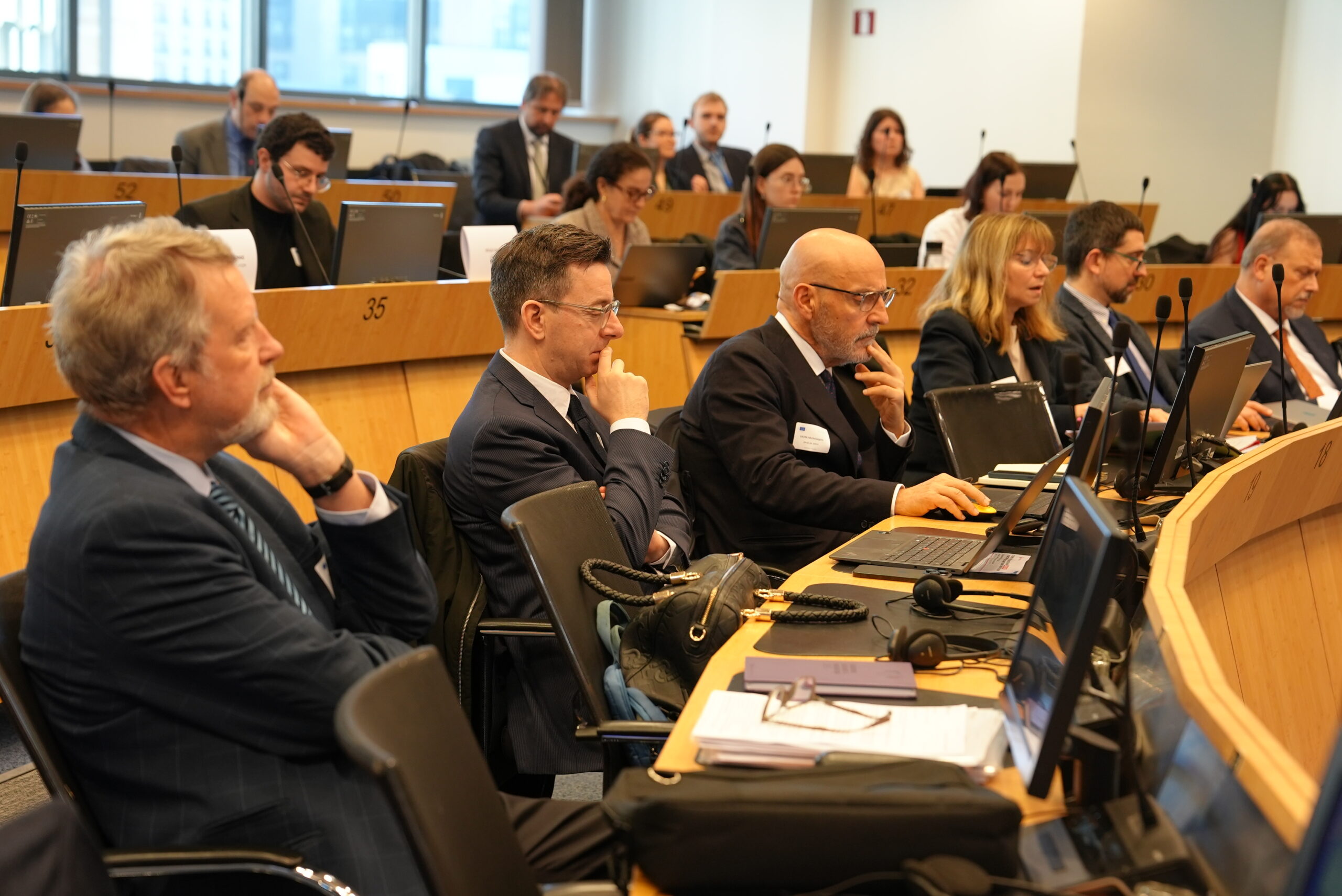
The programme opened on 23 February at the European Parliament, upon invitation of Tuscan MEP Dario Nardella, with the presentation of a joint position paper on the upcoming Framework Programme for Research and Innovation 2028–2034 (FP10) and on the emerging European Competitiveness Fund. Also in attendance were Members of the European Parliament Sandro Ruotolo, Elena Donazzan and Benedetta Scuderi, currently engaged in parliamentary work on Horizon Europe, competitiveness and cultural policies, in a direct dialogue with the Tuscan university system.

Discussions focused on key priorities for the future of European research, including the strengthening of collaborative research, administrative simplification, technology transfer, talent attraction, and the contribution of Tuscan universities to European competitiveness. “An Europe that invests in research invests in its own future,” stated Robert Burmanjer, President of TOUR4EU. “€173 million in awarded EU funds and nearly 400 approved projects, the Tuscan university system has proven to be a competitive actor, ready to contribute to shaping FP10.”

In the following days, the delegation met representatives of the European Commission and EU Executive Agencies, with particular attention to the Marie Skłodowska-Curie Actions, ERA policies, Horizon Europe opportunities within clusters dedicated to health, inclusive societies and culture, as well as perspectives related to the future FP10 proposal and the Competitiveness Fund.

On 25 February, a seminar hosted at the European Committee of the Regions highlighted the Tuscan healthcare ecosystem as a model of excellence and attractiveness for investment and talent mobility. The event showcased best practices from regional innovation ecosystems and underlined the contribution of universities to strengthening the European dimension of health and research.

At key institutional moments, the delegation was joined by Cristina Manetti, Regional Councillor for Universities and Relations with European Institutions, and by the President of the Region of Tuscany, Eugenio Giani, both present in Brussels for a parallel agenda of meetings.

The mission concluded on 26 February with a meeting between the delegation and the community of Alumnae and Alumni of the Tuscan universities active in Brussels, currently engaged within the European institutions, EU policy environments, interest representation and research. The initiative was also supported by the Cesare Alfieri Alumni Association and the Sant’Anna Alumni Association, both of which have an active Brussels chapter. The meeting closed with an address by the Consul General of Italy in Brussels, H.E. Francesco Varriale.

La Toscana a Bruxelles: università, istituzioni e comunità insieme per raccontare la nuova mobilità

Bruxelles, 6 novembre 2025

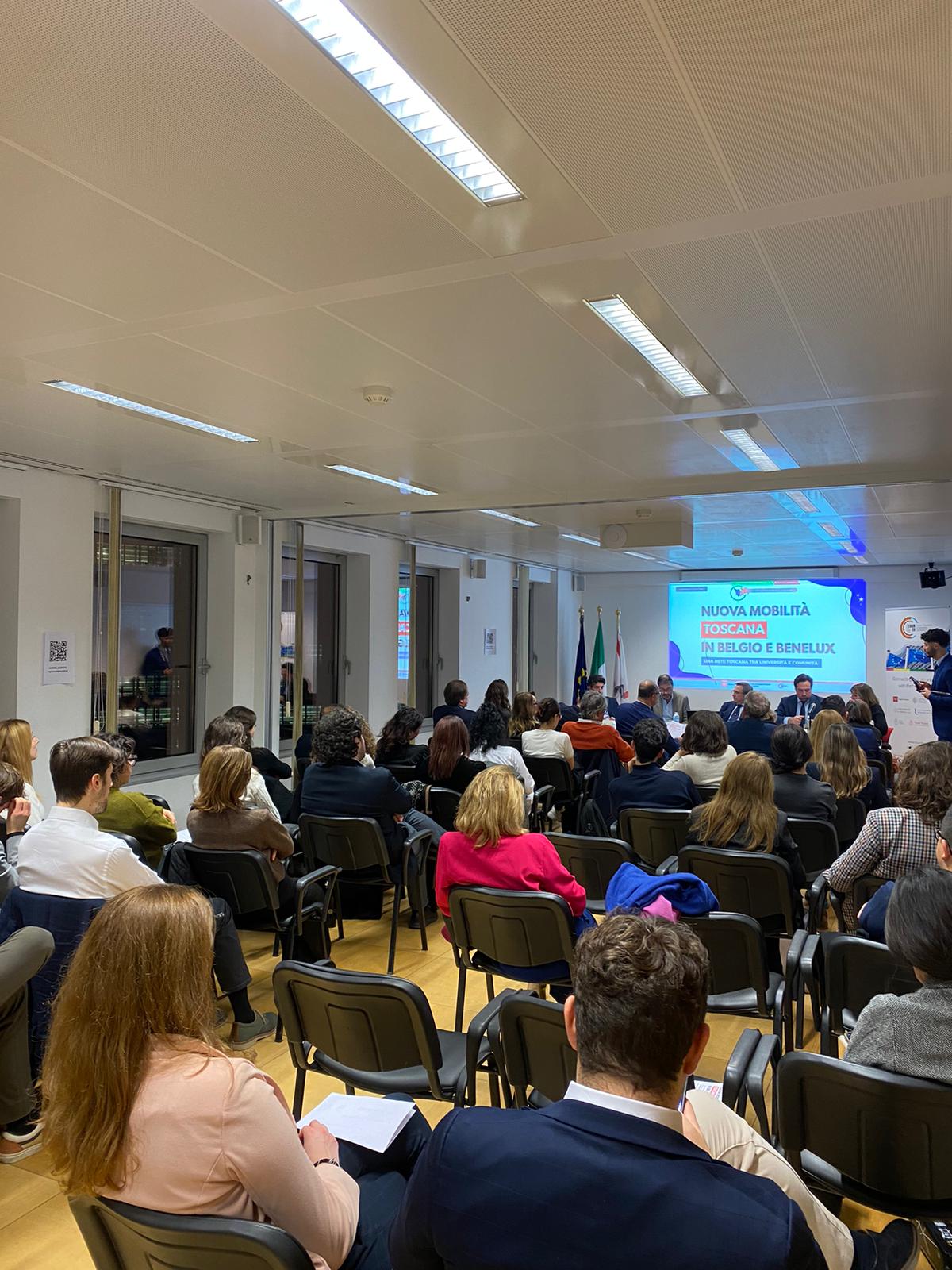
Grande partecipazione presso l’Ufficio della Regione Toscana a Bruxelles per l’evento “Nuova mobilità toscana in Belgio e Benelux: una rete toscana tra università e comunità”, primo appuntamento del progetto “Identità territoriale toscana: fattore di coesione tra vecchia migrazione e nuova mobilità – Ieri, oggi e domani”, promosso dall’Associazione Ex Allievi della Scuola Superiore Sant’Anna di Pisa in collaborazione con TOUR4EU, l’Ufficio di collegamento delle università toscane a Bruxelles, con il contributo della Regione Toscana nell’ambito del programma di valorizzazione delle comunità toscane nel mondo.

L’incontro ha aperto un ciclo di quattro eventi previsti tra il 2025 e il 2026, dedicati a promuovere il dialogo tra la “vecchia emigrazione” e la nuova mobilità qualificata, valorizzando i legami identitari e culturali tra la Toscana e i suoi cittadini all’estero e rafforzando la collaborazione tra università, istituzioni e associazioni.

Il Vicepresidente dell’Associazione Ex Allievi Sant’Anna prof. Giuseppe Turchetti ha sottolineato come l’identità toscana si definisca non solo nel luogo di nascita, ma anche nel luogo in cui si è formati: un’idea di “toscano di formazione” che amplia la comunità di riferimento a chi ha studiato negli atenei della regione. Sono seguiti i saluti della Regione Toscana, portati da Samuele Pii dell’Ufficio di collegamento di Bruxelles, che ha ribadito la volontà della Regione di promuovere una visione aperta e inclusiva dell’identità territoriale.

Nel suo intervento, il prof. Gabriele Tomei dell’Università di Pisa ha presentato i risultati dello studio “Le reti della nuova mobilità toscana”, evidenziando come la quota di laureati toscani all’estero abbia raggiunto il 10,4%, raddoppiando in dieci anni. Un fenomeno spinto da fattori economici ma anche da una crescente dimensione “esplorativa”, che mantiene vivi i legami con il territorio di origine e le università toscane.

La seconda parte dell’evento ha riunito le principali realtà associative toscane e italiane attive in Belgio e nel Benelux – tra cui Ex Allievi Sant’Anna, Alumni Cesare Alfieri, FILEF Belgio, REGIB, ATIB, COMITES Bruxelles, Brabante e Fiandre e REALM – Rete Ambasciatori Livornesi nel Mondo – che hanno discusso la necessità di rinnovare i modelli di rappresentanza e rafforzare la cooperazione intergenerazionale delle comunità toscane all’estero.

Il Console Generale d’Italia a Bruxelles, S.E. Francesco Varriale, ha concluso i lavori sottolineando l’importanza di capitalizzare la mobilità qualificata e di valorizzare le competenze acquisite all’estero, auspicando che le istituzioni italiane sappiano mantenere un dialogo aperto con chi, pur vivendo fuori, continua a sentirsi parte della Toscana. Il progetto “Identità territoriale toscana: fattore di coesione tra vecchia migrazione e nuova mobilità – Ieri, oggi e domani” è cofinanziato dalla Regione Toscana nell’ambito dell’“Avviso pubblico per la presentazione di progetti di diffusione della cultura toscana e di approfondimento e analisi del fenomeno migratorio toscano del passato e del presente” (Decreto dirigenziale n. 3845 del 19/02/2025) – CUP D14H25000230002.

TOUR4EU hosts successful second edition of training course for Tuscan universities’ research offices

Versione italiana di seguito

Brussels, 3rd October 2025

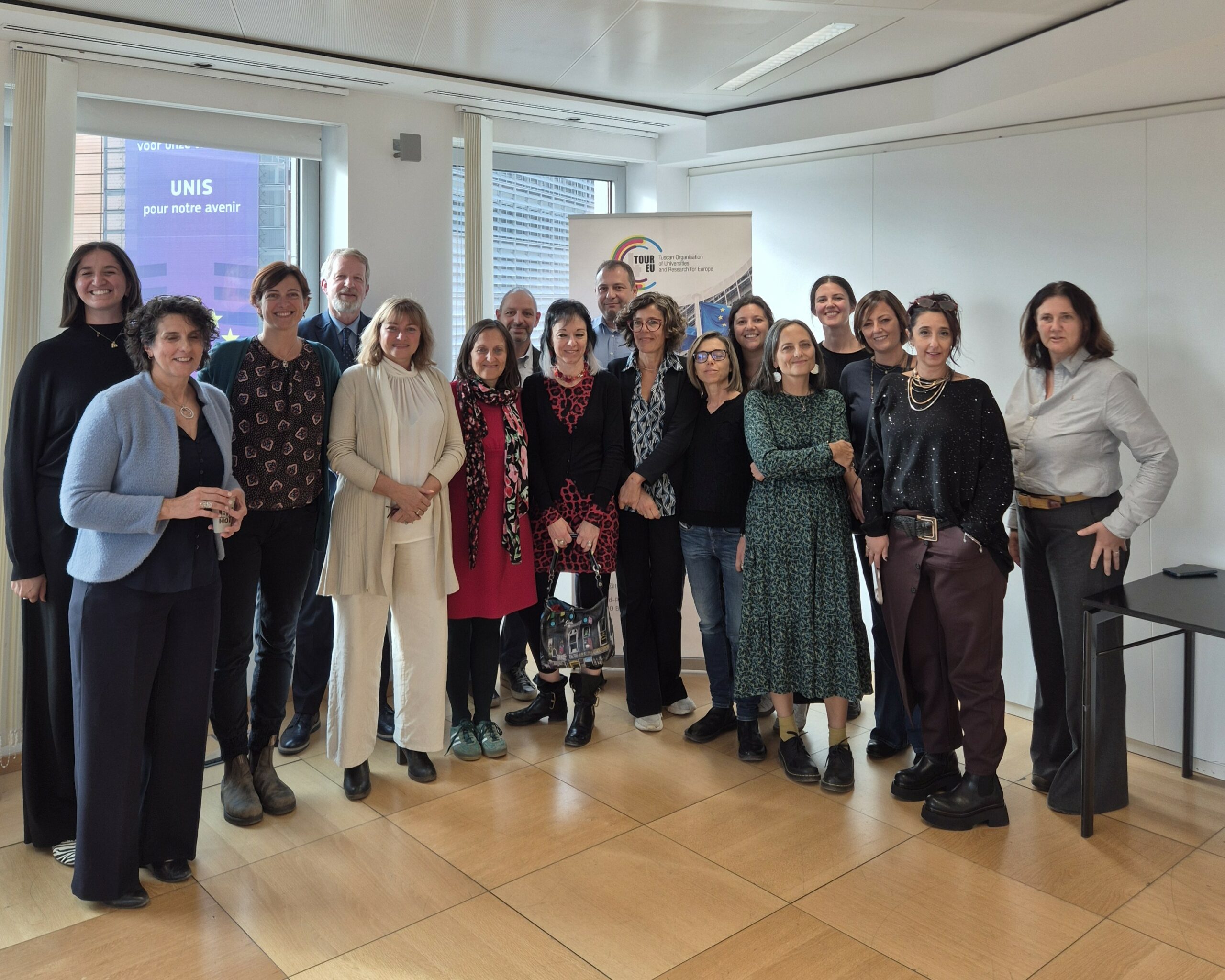
The new President of TOUR4EU, Robert Burmanjer – former Head of Unit at the Directorate-General for Research and Innovation of the European Commission – opened the second in-person edition of the training course in Brussels, dedicated to the research and administrative offices of Tuscan universities.

Organised by TOUR4EU, the representation of Tuscan universities in Brussels, the course took place from 1 to 3 October 2025 and brought together research managers and administrators from all seven universities of the region – Florence, Pisa, Siena, Sant’Anna School of Advanced Studies, Scuola Normale Superiore, IMT School for Advanced Studies Lucca, and the University for Foreigners of Siena – together with representatives from the National Research Council (CNR) and, for the first time, from the Tuscan healthcare agencies, who joined remotely.

In total, over 50 participants followed the sessions online, while 16 attendees took part in person during the three-day programme held at TOUR4EU’s premises, in the heart of the European Quarter.

The distinctive feature of this initiative lies in the unique opportunity it offers to technical-administrative and research support staff to meet directly with officials, evaluators, and decision-makers from the European institutions, engaging with those who shape and implement the EU’s research and innovation policies on a daily basis.

The programme addressed the most current and emerging topics of the European landscape, ranging from the proposal for the Multiannual Financial Framework 2028–2034 and the Tenth Framework Programme (FP10) to the new Horizon Europe Missions, EU4Health initiatives, the European Health Data Space Regulation (EHDS), and the role of European Partnerships — often little known, yet central to the future governance of research.

The sessions featured contributions from representatives of the European Commission (DG RTD, DG SANTE, JRC), the Permanent Representation of Italy to the EU, and the Executive Agencies REA and ERCEA, as well as experts from ERRIN and various European academic networks. Ample space was devoted to exchange of best practices with other universities – such as the University of Ghent – and to the presentation of practical tools aimed at improving project management and participation in EU calls.

This edition also provided an opportunity to strengthen connections with Tuscan professionals currently working within the European Commission, establishing a valuable channel for dialogue and mentoring within the regional academic community.

Through this initiative, TOUR4EU reaffirms its mission to strengthen the bridge between Tuscany and the European research ecosystem, promoting excellence, dialogue, and new opportunities for collaboration among universities, institutions, and territories.

____

Bruxelles, 3 ottobre 2025

Il nuovo Presidente di TOUR4EU, Robert Burmanjer – già Capo Unità presso la Direzione Generale della Ricerca e Innovazione della Commissione Europea – ha aperto la seconda edizione del corso di formazione in presenza a Bruxelles dedicato agli uffici ricerca e amministrativi degli atenei toscani.

Organizzato da TOUR4EU, la rappresentanza delle università toscane a Bruxelles, il corso si è svolto dal 1° al 3 ottobre 2025 e ha riunito responsabili e amministratori della ricerca provenienti da tutti i sette atenei della regione – Firenze, Pisa, Siena, Scuola Superiore Sant’Anna, Scuola Normale Superiore, IMT Alti Studi Lucca e Università per Stranieri di Siena – insieme a rappresentanti del CNR e, per la prima volta, delle Aziende sanitarie toscane, collegate da remoto.

In totale, oltre 50 persone hanno seguito i lavori online, mentre 16 partecipanti hanno preso parte in presenza alle tre giornate di attività presso la sede di TOUR4EU, nel cuore del Quartiere europeo.

L’aspetto distintivo di questa iniziativa è la possibilità, unica nel suo genere, per il personale tecnico-amministrativo e dei servizi ricerca di incontrare direttamente i funzionari, i valutatori e i decisori delle istituzioni europee, confrontandosi con chi ogni giorno contribuisce alla definizione e attuazione delle politiche di ricerca e innovazione dell’Unione Europea.

Il programma ha toccato tutti i temi di maggiore attualità e novità del panorama europeo, dalla proposta del Quadro Finanziario Pluriennale 2028–2034 al Decimo Programma Quadro (FP10), passando per le nuove Missioni di Horizon Europe, le iniziative EU4Health, il Regolamento sullo Spazio Europeo dei Dati Sanitari (EHDS) e il ruolo dei Partenariati europei, spesso poco conosciuti ma centrali nella futura governance della ricerca.

Le sessioni hanno visto l’intervento di rappresentanti della Commissione Europea (DG RTD, DG SANTE, JRC), della Rappresentanza Permanente d’Italia presso l’UE e delle Agenzie esecutive REA ed ERCEA, oltre a esperti di ERRIN e network accademici europei. Ampio spazio è stato riservato allo scambio di buone pratiche con altri atenei europei, come l’Università di Ghent, e alla presentazione di strumenti pratici per migliorare la gestione dei progetti e la partecipazione ai bandi.

Questa edizione ha inoltre rappresentato un’occasione per rafforzare il legame con i funzionari toscani e le toscane che oggi lavorano presso la Commissione Europea, creando un prezioso canale di dialogo e mentoring per la comunità accademica regionale.

Con questa iniziativa, TOUR4EU riafferma la propria missione di rafforzare il ponte tra la Toscana e l’Europa della ricerca, promuovendo eccellenza, dialogo e nuove opportunità di collaborazione tra università, istituzioni e territori.

ERC Starting Grants 2025: €7.5 million for five researchers in Tuscany

Brussels – 5th September 2025

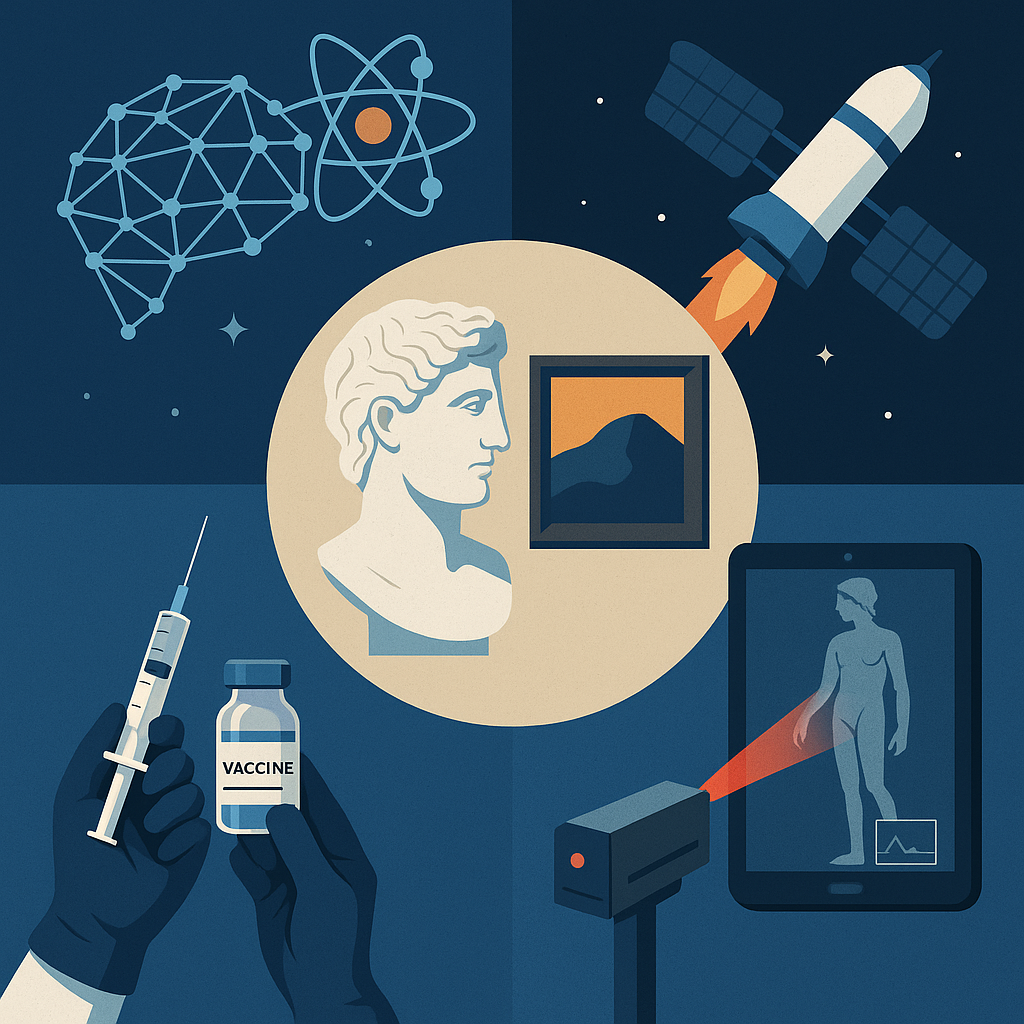
For a total of €7.5 million in European funding, five projects based in Tuscan institutions or led by Tuscan researchers have been awarded the prestigious ERC Starting Grants 2025, one of the most competitive and internationally renowned funding schemes of the European Research Council.

From the secrets of Renaissance masterpieces to the engines of the future and innovative vaccines against emerging viruses: Tuscany once again confirms its role at the forefront of European research.

Among the winners:

  • Alberto Privitera, University of Florence, with the project LIGHT-QIS on light-driven molecular spin qubits, paving the way for next-generation quantum technologies.
  • Vittorio Giannetti, Sant’Anna School of Advanced Studies, with the project PHOENIX dedicated to the design of high-performance orbital engines with innovative acceleration models, opening new frontiers for space exploration.
  • Francesca Di Turo, Scuola Normale Superiore, with the project SHADES, which will develop predictive tools to study the fading of colours in artworks, helping preserve Europe’s cultural heritage.
  • Emanuele Andreano, Toscana Life Sciences Foundation, with the project PROTECTIVE focused on new therapeutics and vaccines against poxviruses, enhancing Europe’s preparedness against future health emergencies.
  • Antonina Chaban, CNR – Istituto Nazionale di Ottica (National Institute of Optics – Florence), with the project HeRiDe, which will revolutionize the conservation of frescoes through advanced optical techniques, allowing experts to identify and prevent damage hidden beneath painted surfaces.

Each ERC Starting Grant provides up to €1.5 million in funding over five years, giving young researchers the resources to build their own teams and pursue ambitious, high-risk/high-gain projects. These awards demonstrate the breadth and excellence of research carried out in Tuscany, spanning quantum physics, aerospace engineering, cultural heritage, and biomedical innovation.

“Each of these grants is a success not only for the individual researchers but for the entire Tuscan academic and scientific community. It is a source of great pride and honour for our universities to see their talents compete and win at the highest European level,” said Robert Burmanjer, recently appointed as President of TOUR4EU, the Tuscan association of universities in Brussels. “The results prove that Tuscany is an ecosystem capable of nurturing cutting-edge ideas and transforming them into projects with global impact.”

The European Research Council Starting Grants are reserved for outstanding researchers with two to seven years of experience since completing their PhD, and they represent a springboard toward scientific leadership. The results achieved by Tuscan institutions confirm the region’s growing ability to compete internationally in highly selective programs.

For Tuscany, this recognition is not only a scientific milestone but also a strategic investment in innovation, culture, and health, strengthening the region’s reputation as a hub of excellence in Europe.

Robert Burmanjer, new President of TOUR4EU

Brussels, 25 June 2025

The General Assembly of TOUR4EU – Tuscan Organisation of Universities and Research for Europe – today ratified the appointment of Robert Burmanjer as its new President, succeeding Prof. Monica Barni, who has led TOUR4EU since its establishment in 2018.

Robert Burmanjer brings extensive experience in European institutions: currently Senior Advisor at APRE – the Italian Agency for the Promotion of European Research, he previously served for many years at the European Commission, where he headed strategic units in the fields of international research cooperation, innovation policy, and knowledge management. Before joining the European institutions, he worked for the Dutch Ministry of Foreign Affairs with assignments in Europe and the Gulf. An academic by training, he has conducted research in industrial economics at the European University Institute in Florence and was a member of its Academic Council.

It is an honour for me to be called upon to lead an organisation such as TOUR4EU – said Burmanjer – which represents one of the most dynamic university ecosystems in Italy, right in the heart of Europe. We will continue to strengthen the bridge between Tuscan research and Brussels, promoting internationalisation, excellence and strategic participation in European programmes.

Alessandra Nardini, Councillor for Universities, Research and International Relations of the Tuscany Region, commented:

We strongly supported Robert Burmanjer’s appointment, confident that his extensive expertise in the European research and innovation context will enable us to vigorously pursue the interests of the Tuscan ecosystem, strengthening TOUR4EU’s role as a strategic interface between territories, universities and European institutions. I would like to thank Professor Monica Barni for the work she has generously continued to carry out over the years. I have a relationship of sincere esteem and fruitful collaboration with Monica, which began during the previous regional legislature, when we were both involved, she in the Regional Council and I in the Regional Executive, in defending and promoting the right to higher education. Finally, I would also like to thank our regional office in Brussels and Simona Costa for the work they have done and will continue to do.

Councillor Nardini also takes the opportunity to thank the outgoing members of the Board of Directors, composed of prof. Debora Berti (Vice-Rector for Research at the University of Florence) and prof. Marialuisa Catoni (Vice-Rector for Research and Innovation at IMT School for Advanced Studies Lucca), and to extend her best wishes for the work ahead to the new members: prof. Francesca Capone (Vice-Rector for Internationalisation Policies at Scuola Superiore Sant’Anna) and prof. Michelangelo Vasta (Research Delegate at the University of Siena).

Monica Barni, currently Full Professor at Sapienza University of Rome, where she also serves as Director of the University Language Centre, steps down after seven years of intense activity. Formerly Rector of the University for Foreigners of Siena and Vice-President of the Tuscany Region with responsibility for universities and research, she boasts a strong academic background and has participated in numerous international expert groups on language policies for migrant integration and regional development. Under her leadership, TOUR4EU has contributed to strengthening the European dimension of the Tuscan university system by promoting institutional synergies, strategic projects and a common vision for research and innovation.

This transition comes at a crucial moment for the development of the new European Framework Programme for Research 2028–2034. TOUR4EU will continue to act as a point of reference for European project development, institutional advocacy, and strategic dialogue between universities, regions, and EU institutions.


Alessandra Petrucci, Rector of the University of Florence, engages in High-Level Discussions in Brussels

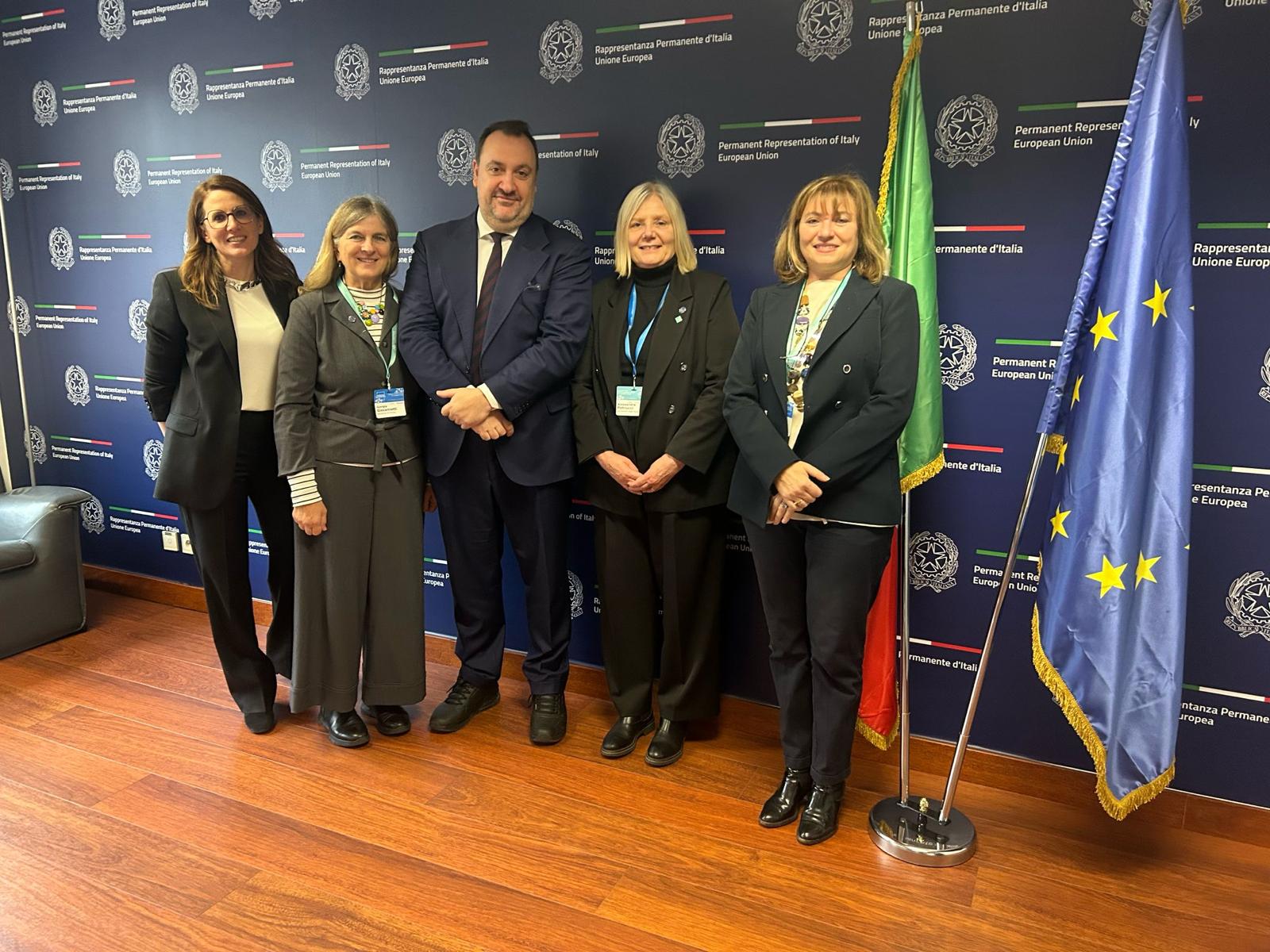
Professor Alessandra Petrucci, Rector of the University of Florence, accompanied by Professor Giorgia Giovannetti, Pro-Rector for International Relations, conducted a two-day mission to Brussels on 26th and 27th February 2025. The visit aimed to engage with European leaders on pivotal higher education initiatives and to highlight the contributions of the Florentine higher education system at the European level.

On 26 February, Rector Petrucci met with Roxana Mînzatu, Executive Vice-President for Social Rights and Skills, Quality Jobs and Preparedness. The discussion centered on the strategic role of university alliances in the upcoming Union of Skills initiative, emphasizing the importance of collaborative efforts to drive transformation and reduce fragmentation in the European higher education sector.

On 27 February, Rector Petrucci engaged with key representatives at the Permanent Representation of Italy to the European Union, including H.E. Ambassador Marco Canaparo, Deputy Permanent Representative and Ambassador to COREPER I, and Maria Palladino, Education Attaché. The discussions focused on the European Degree Initiative, with recommendations scheduled for a Council vote on 12 May.

In both meetings, Rector Petrucci advocated for the swift advancement of the European Degree on a voluntary basis, respecting the subsidiarity principle and the competencies of EU Member States. She highlighted that the European Degree builds upon successful initiatives such as Erasmus Mundus, Marie Skłodowska-Curie Actions, and the European Universities Initiative. By engaging diverse stakeholders, the European Degree aims to enhance the global attractiveness of European higher education, increase the visibility and reputation of participating universities, and equip students with future-proof skills to navigate an evolving labour market.

Addressing structural considerations, Rector Petrucci called for flexible and enabling frameworks that guarantee academic freedom. She underscored the importance of accommodating varying national education systems and reducing bureaucratic hurdles to facilitate the joint delivery of degrees. Additionally, she emphasised the need for a streamlined, cross-national accreditation process to support the implementation of the European Degree.

Expressing strong support for the European Degree, Rector Petrucci noted Italy’s proactive stance, having integrated the initiative into its internationalisation strategy for higher education. She also highlighted the unique contribution of the European University for Well-Being (EUniWell) alliance, of which the University of Florence is a proud founding member. EUniWell focuses on promoting well-being through interdisciplinary research and education, aligning with the broader goals of the Union of Skills and European competitiveness.

Finally, Rector Petrucci acknowledged the importance of the Association of Tuscan Universities, TOUR4EU, of which the University of Florence is a notable member, highlighting its dedication to enhancing European academic partnerships and contributing to the shaping of policies that bolster internationalisation and research excellence.

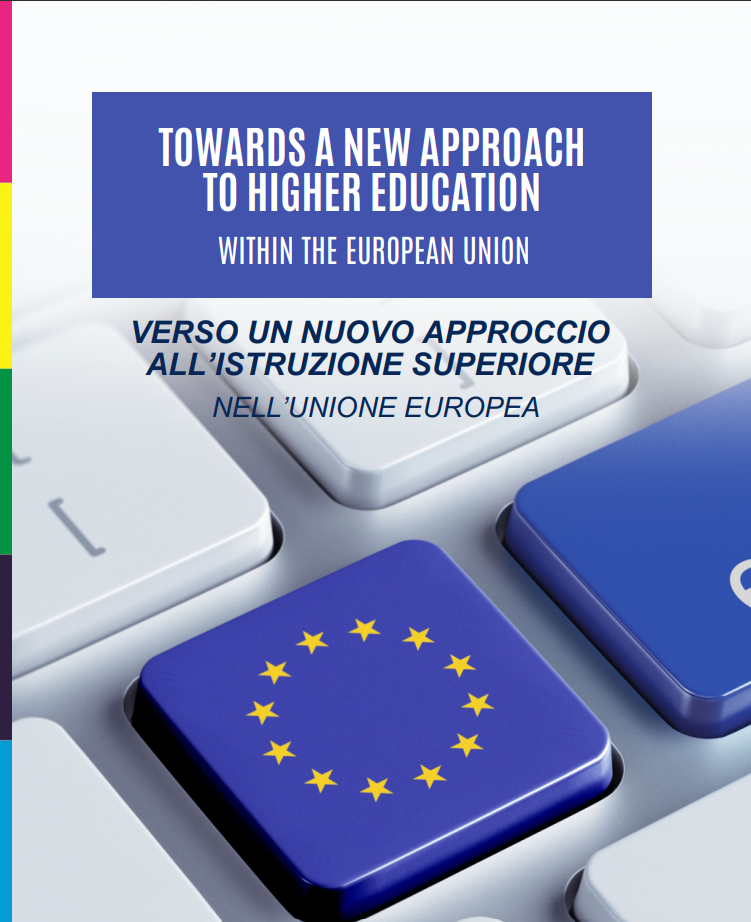
Unveiled the 3rd edition of the report “Towards a new approach to higher education in the European Union”

The third version of the study “Towards a New Approach to Higher Education in the European Union,” authored by Eleonora Erittu, formerly a student of the Political and Social Sciences Class at the Scuola Normale and currently a research fellow at the Department of Political and Social Sciences at the University of Bologna, has been published open access. The report, initially published in June 2021, is the result of collaboration between the Friends of the Scuola Normale Superiore of Pisa and TOUR4EU, which sponsored a bilingual and updated version available in the institutional research archive of the Scuola Normale Superiore at the following link.

This is a substantial contribution aimed at illustrating the transformations in the European higher education landscape, offering an in-depth look at the past decade, and focusing on the period starting with the establishment of the von der Leyen Commission. European transformations are also discussed at the legislative level. The report narrates the path initiated with the ET2020 strategy (EU cooperation in education and training) and highlights the increased attention paid to the education sector, recognised as an economic and social engine of the entire Union in the aftermath of the pandemic.

This edition coincides with recent communications from the Commission on, among others, education, research and development, digitalization, and the green transition, with the added value of integrating the theme of education with other sectors, demonstrating its cross-sectoral scope.

The document is intended not only as a work of analysis and dissemination, but also as a toolkit for sector professionals. Its structure, alternating between text and in-depth sections, makes access to information quick and intuitive, with a section dedicated entirely to schematic summaries of key documents, such as communications on the European Education Area (EEA), the European Research Area (ERA), the digital plan, and the one on micro-credentials.

Special attention has been paid to the bilingual nature of the text, recognising the importance of multilingualism and its utility outside the Italian academic space. This choice aims to promote an inclusive approach that enhances linguistic diversity and facilitates understanding by professionals across Europe.

This third edition is the result of the continued commitment and support of TOUR4EU and all the universities in the Region of Tuscany, which have actively contributed to the report’s update, making it an even more comprehensive and relevant tool.

TOUR4EU Joins GlyCanDrug, an Innovative Project in Cancer Research

TOUR4EU, the Belgian organisation representing Tuscan universities and the Tuscany Region in Brussels, announces its participation as an associated partner in the GlyCanDrug consortium. GlyCanDrug is an innovative project funded under the Marie Skłodowska-Curie Doctoral Networks (MSCA-DN), a component of the Horizon Europe research program, with a focus on glycoscience.

The GlyCanDrug project aims to promote scientific excellence in the discovery of anti-cancer drugs based on therapies targeting glycans, which have significant potential in the fight against cancer. Glycans, part of glycoscience, are a complex category of carbohydrate-based molecules capable of covalently binding lipids, proteins, and nucleic acids. Therapies based on glycans could provide targeted and innovative therapeutic options, contributing to the improvement of individual well-being and communities.

The consortium of the GlyCanDrug project has joined forces, creating an international, multidisciplinary, and cross-sectoral network of experts in glycoscience, from both academic and industrial backgrounds. This ambitious project, with the University of Florence as one of the main partners, aims to train ten doctoral students. These future professionals will gain in-depth knowledge of the potential of glycoscience in the discovery of precision therapies against cancer, along with essential cross-disciplinary skills.

The Kick-Off Event of the project, held online on Friday, January 19, 2024, served as a platform to present the project’s objectives, introduce the consortium members, and allowed TOUR4EU to propose communication and dissemination strategies for the project’s results. The event laid the foundation for collaboration among consortium partners, connecting research institutions, European university networks, the private sector, and European institutions.

GlyCanDrug aims to train the next generation of leading professionals in the development of innovative cancer drugs, thus meeting the needs of the industrial and academic labor market in the European Union.

The GlyCanDrug consortium met online for the Kick-Off meeting on January 19th.